

How to Choose the Right Rug Under a Dining Table


The dining room is easily one of the most used areas of the house. A place for casual family dinners and celebratory gatherings. How do you design the space to encapsulate all that this space means to you? Do you focus on beauty, comfort, or practicality in this household hub?
A good approach to dining room design is to start from the ground up. A rug under a dining table serves as a design anchor for the room and helps define the area. Here’s how to find the best rug for your dining room.
Pros and considerations for using a rug under a dining table
There are many reasons to use a rug in your dining room. Starting with aesthetics, a rug under a dining table creates a grounding visual structure. This is especially so in homes with open floor plans. A rug will help create a zone for your dining area without the use of walls or vertical boundaries.
A rug under a dining table also serves as floor protection in this highly used area: chairs scooting in and out, lots of foot traffic, and spills. Rugs provide a barrier, reducing wear and tear on your floors. In noisy dining areas, a rug helps absorb sound, making it easier to hear dinner conversation, even with larger groups.
The one major thing to consider when choosing a dining room rug is maintenance. It will help protect your floor, but it will also accumulate crumbs and be subject to times when food and drink inevitably spill on it.
Incorporating a rug into a dining area means you have to be willing to maintain it over time. This is why it’s not only important to pick a rug that fits your design, but also one made of materials that can stand up to heavy use and can be easily cleaned.
The Napa Sisal Rug in Cardamom helps absorb echoes in dining areas.
What rug materials work best in a dining room
The best rug material for a dining room will have a few key characteristics. It must have a low-pile and be flat-woven, such as a sisal rug. A low-pile rug makes vacuuming easier, and a flat-woven one won’t trap crumbs, making the rug easier to clean.
You can also consider an outdoor rug for your indoor dining room. Outdoor rugs made of polypropylene, for example, are designed to withstand the elements, easily repelling liquids and resisting mold and mildew. These characteristics make it perfect for a rug under a dining table that will last the test of time.
Don’t be afraid to use an outdoor rug under your dining table, like this All-Weather
Indoor Outdoor Polypropylene Rug in Costa Rica Sisal.
Dining Table Rug Maintenance Tips
If you choose to use a rug under your dining table, the best way to make it last is through regular maintenance. No matter if you choose sisal or polypropylene, you’ll want to vacuum it at least once a week to pick up excess crumbs or food bits that make their way to the floor.
When it comes to spills, blot the stain immediately to help lift it. Do not rub the spill, or else you risk making the stain worse and harder to clean. For particularly stubborn stains, you can use a rug spot cleaner, and even protect the rug from stains by spraying it with a rug stain guard. While you should not use water to clean a sisal rug, polypropylene can be cleaned with water, so much so that you can spray it down outside with a hose. You just want to make sure it dries completely before bringing it back inside.
Lastly, to extend a rug's lifespan under a dining table, use a rug pad. Rug pads not only hold a rug in place, they also provide extra cushion. This prevents the rug from sliding around, which can contribute to wear and tear. Plus, rug pads provide a soft barrier between the rug and the floor.
A solid rug pad is just one option for maintaining your dining room rug.
How to pick the right size and shape
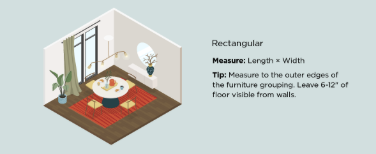
To pick the right shape of a rug under a dining table, first look at the shape of your table. If you have a rectangular table, you want a rectangular rug. If you have a round table, you’ll need a round rug. This will ensure visual harmony within your dining room.
For sizing, the key rule to remember is that the rug should have a clearance of 18-24 inches beyond the chairs or the edge of the table. So, let's say you have a table that is a standard size of 60 inches x 36 inches (6 x 3 feet). You would want to get a rug that is somewhere between 78-84 inches long and 54-60 inches wide for the best placement under the table.
When to skip the rug
While a rug under a dining table serves many purposes, there are circumstances where it’s better to omit it. When dealing with a tight dining space, the suggested clearance is not achievable, throwing off the room's proportions and making the area feel smaller than it already is. If the proportions don’t work, it’s okay. You don’t have to force a rug into the room.
From a practicality standpoint, if you prefer mopping a floor to vacuuming once a week, a rug won’t be your best option. A rug should work with your day-to-day life and not be an extra hassle. There may also be cases where you want to show off the floor in a dining space, so covering it with a rug wouldn’t make sense. However, remember that in these cases, the rug will help protect your floors long term.
Anchor your dining room
Now's the fun part: you can start searching for the perfect dining room rug! The first step is to measure your table to figure out sizing. Don’t worry if it isn’t a standard size. We offer custom sizing for all of our natural fiber rugs. And if you aren’t sure which pattern to go with, just get in touch, and we can send you sample swatches for color testing. Whichever rug you choose, it will be the perfect anchor for all your design choices in your dining room.



