

Carpet vs. Area Rug: What's the Difference?


While carpet and area rugs both bring warmth and texture to a room, they work very differently in practice. The better choice depends on your floors, your budget, and how often you like to change things up.
What is the difference between carpet and an area rug?
Carpet is installed wall to wall and fastened to the floor, covering an entire room. An area rug is a finished, movable piece placed on top of hard flooring or carpet, sized to define a specific zone.
Carpet is typically stretched over a cushion pad and secured along the walls, so it is one continuous surface. Area rugs have bound or serged edges and can be moved, cleaned, or replaced without any installation work.
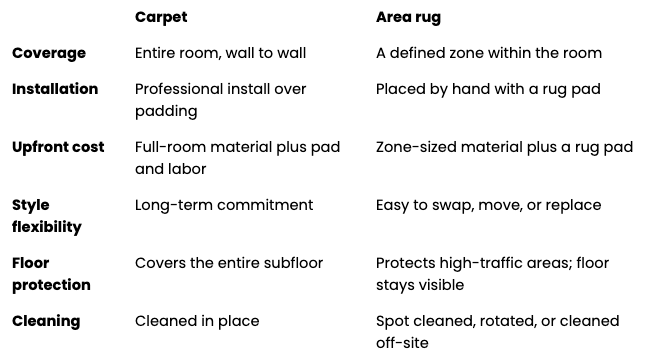
Carpet vs. area rug: How they compare
Cost
An area rug typically costs less because it covers less floor and doesn't require professional installation. Carpet pricing includes material for the full room, padding, and labor.
Installation
A rug is ready to use once you add a rug pad, which keeps it in place and adds cushioning. Carpet requires precise measuring, a professional installer, and an empty room on installation day.
Comfort and noise
Carpet offers more warmth and sound absorption because it covers every inch of floor. Natural fiber rugs fall across a spectrum of comfort and durability. Wool is the softest natural option, jute and hemp grass fall in the middle, and sisal and seagrass are firmer.
Cleaning
Rugs can be spot cleaned, rotated to even out wear, or sent out for professional cleaning. Carpet can only be cleaned in place, and spills that reach the pad are harder to remove.
When does an area rug make more sense?
When you rent
Most leases don't allow tenants to change flooring, and some require covering part of the floor to reduce noise for neighbors below. A rug meets both requirements and moves with you.
When you want to protect hardwood floors
A rug protects walkways and seating areas while leaving an even border of wood on display. Natural fibers like sisal, jute, and wool pair well with wood tones. See our guide to styling a wooden floor with a rug for color and placement tips.
Arrow Extra Wide Sisal Rug Collection in Mountain Ash
When your style evolves
Carpet typically stays in place for years. A rug can be swapped for a new color, moved to another room, or replaced with a new shape or size when your layout changes.
When you already have carpet
A rug over carpet adds texture, defines a seating or dining area, and covers worn spots. Flat weaves like sisal and jute lie flat over low-pile carpet. Our tips for rug layering cover sizing and placement.
When is wall-to-wall carpet the better choice?
Carpet makes the most sense when you want continuous coverage and maximum sound absorption, such as in bedrooms or on upper floors. Sisal Rugs Direct offers its natural fiber and outdoor collections as wall-to-wall carpet, shipped unbound for professional installation.
Waverly Nylon Residential / Commercial Rugs & Carpet Collection in Khaki
Still weighing your options? Speak with one of our design experts and order free samples to see how a natural fiber or Performance rug or carpet would look and feel in your space.



