

What Should High Traffic Area Rugs Be Made Of?


No one wants to buy a rug that’s going to break down and come apart after only a few years. When it comes to choosing high traffic area rugs, toughness is paramount. Above all other considerations, your high traffic rug needs to be able to take whatever your feet can throw at it without tearing, fraying, or otherwise falling apart.
Whether you’re looking for a rug for your entryway, your main hallway, a highly-trafficked kitchen or living room, or even a staircase, Sisal Rug Direct has multiple fibers that can do the job. Which of these tough fibers is right for you will depend on your other needs, as well as your personal taste. Here’s the info to help you make your decision:
Best materials for high traffic area rugs, at a glance
The best materials for high traffic area rugs are typically sisal, seagrass, and polypropylene because they combine durability, stain resistance, and long-term wear performance. The right choice depends on where the rug will be used, how much moisture exposure it will face, and whether you prefer natural or synthetic fibers.
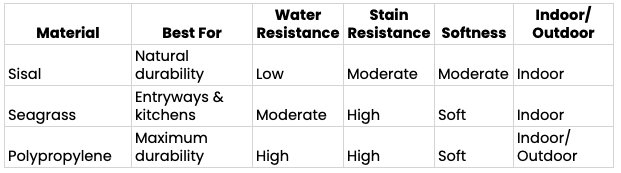
Why sisal rugs work well in high traffic areas
If you’d prefer a natural fiber for your high traffic area rug without sacrificing the durability you’ll need, sisal is your best bet. The sisal fibers we use to weave our rugs are derived from leaves of Agave Sisalana plants grown especially for the purpose on plantations in Tanzania, East Africa.
Sisal fibers are renowned for the strength they retain relative to their flexibility. They’re commonly used to make products that need to withstand heavy use in demanding environments, like twine for marine and bailing, rope, plastic reinforcements, or even dartboards. This durability makes them ideal for high traffic area rugs, because they’ll be able to capably withstand heavy foot traffic without warping or fraying.
A sisal rug will work for most high traffic areas, but there are a few instances where you may want to consider a different fiber instead. For example, sisal is not waterproof and can foster mold and mildew if it's wet for a long period of time. If you suspect your high traffic area rug will frequently get wet and you don’t want to clean and dry it as soon as it does, you may be better off with a synthetic fiber.
UV rays from direct sunlight can also cause sisal fibers to fade and weaken, so you may want to consider a different fiber if you’re planning on leaving your high traffic area rug in direct sunlight.
Bottom line: Sisal is one of the best natural rug materials for dry, high traffic indoor spaces thanks to its exceptional durability and timeless texture. It performs best away from excess moisture and direct sunlight.
Why seagrass rugs work well in high traffic areas
If you’re still more interested in going natural than synthetic but sisal isn’t the right choice for you, seagrass can be an excellent alternative. Seagrass rugs are made from fibers derived from the Sedge family of grasses, which are harvested in paddy fields that are flooded with seawater during the growing cycle, hence the name.
Like sisal, seagrass fibers are one of the most durable natural fibers. They’re frequently hand-woven into durable products like baskets, placemats, bowls, furniture, and flooring. Seagrass is nearly as durable as sisal and just as soft underfoot, making it an excellent choice for high traffic area rugs anywhere inside your space.
One huge advantage seagrass rugs have over sisal is that seagrass fibers are naturally non-porous. They’re one of the most stain-resistant natural fibers we can make rugs out of, and they have a natural level of water resistance. You still shouldn’t leave seagrass rugs wet for long periods of time, but you won’t have to worry about the occasional splash from wet boots in an entryway or walk-up.
One potential disadvantage of seagrass is that because they’re so naturally non-porous, they can’t be dyed. While seagrass comes in a small variety of different natural hues, all seagrass rugs retain a natural, neutral beige color that will fade over time. If you’re looking for a high traffic area rug in bold and striking colors, seagrass may not offer what you need.
Bottom line: Seagrass offers the durability of natural fiber with added stain and moisture resistance, making it a smart choice for busy entryways, kitchens, and other active indoor areas.
Why polypropylene rugs work well in high traffic areas
If you don’t mind choosing a synthetic fiber for your high traffic area rug, Polypropylene, also known as “outdoor sisal,” would be our go-to recommendation. Polypropylene is a polymer created from monomer propylene. It’s frequently used to create highly-durable packages, labels, textiles, and reusable containers. The polypropylene fibers we use are made to look exactly like sisal.
As their name suggests, these “outdoor sisal” rugs retain all the advantages of sisal without many of the drawbacks of the natural fiber. Like sisal, polypropylene is extremely durable without sacrificing its softness. Polypropylene rugs feel very comfortable underfoot, but they’re capable of handling any level of foot traffic without wear and tear.
Like seagrass, polypropylene rugs are non porous. In fact, they’re so efficient at wicking away moisture that we recommend polypropylene rugs for outdoor spaces like decks and porches. You won’t even need to worry if you leave your polypropylene high traffic area rug out in the rain. Their waterproof quality also makes them extremely easy to clean: just hose them down when they start looking dirty. Our polypropylene fibers are even UV-treated, so they won’t fade or break down in the sun like natural sisal will.
As a synthetic fiber, polypropylene can come in a wider variety of colors than most natural fibers. You’ll be able to pick from a large variety of hues and tones, making polypropylene an excellent choice if you’re looking for colorful high traffic area rugs.
Bottom line: Polypropylene is the most versatile option for high traffic areas, combining softness, durability, water resistance, UV protection, and easy maintenance for both indoor and outdoor use.
How to choose the right high traffic rug material
The best rug material for a high traffic area depends on how your space is used day to day. If you have pets or children, stain resistance and easy cleaning may be your top priorities. For homes with frequent moisture exposure — such as entryways, mudrooms, kitchens, or covered outdoor areas — a water-resistant fiber like polypropylene is often the best choice.
If you prefer a more natural look and feel, sisal and seagrass offer excellent durability while bringing warmth and texture into your space. Sisal is ideal for dry indoor areas that experience constant foot traffic, such as hallways, staircases, and living rooms. Seagrass is a great middle ground for homeowners who want a natural fiber with added stain and moisture resistance.
For rooms with direct sunlight, synthetic fibers may also hold up better over time, since natural fibers like Sisal can gradually fade with prolonged UV exposure.
At the end of the day, choosing the right high traffic rug comes down to balancing durability, maintenance needs, aesthetics, and where the rug will be used most often.
How to make high traffic area rugs last longer
Even the most durable high traffic area rugs will last longer with proper care and maintenance. Regular vacuuming helps prevent dirt and debris from becoming embedded in the fibers, which can gradually wear rugs down over time. Using a rug pad underneath can also reduce friction, minimize shifting, and add cushioning that protects both the rug and your flooring.
For natural fiber rugs like sisal and seagrass, it’s important to clean spills quickly and avoid prolonged moisture exposure. While seagrass offers some natural water resistance, standing moisture can still lead to long-term damage if left untreated. Rotating your rug every few months can also help distribute wear more evenly, especially in entryways, hallways, and living rooms where foot traffic follows the same path each day.
Synthetic options like polypropylene tend to require less maintenance overall. Because they resist moisture and stains so effectively, many polypropylene rugs can simply be rinsed clean with water when needed. With routine care and placement in the right environment, a quality high traffic area rug can maintain its appearance and durability for many years.
When you’re ready to start putting together your ideal high traffic area rugs, just head over to our online customizer to find your perfect option.
Frequently asked questions about high traffic area rugs
What is the most durable rug material for high traffic areas?
Sisal, seagrass, and polypropylene are all highly durable choices for high traffic spaces. Polypropylene is generally the most resistant to moisture, stains, and fading, while sisal and seagrass are popular natural fiber alternatives.
Are natural fiber rugs good for busy areas?
Yes. Natural fibers like sisal and seagrass are known for their strength and durability, making them excellent choices for hallways, living rooms, staircases, and entryways.
What rug material is easiest to clean?
Polypropylene rugs are typically the easiest to clean because they resist moisture, stains, and mildew. Many can simply be hosed down and air dried.
Are seagrass rugs waterproof?
Seagrass rugs are naturally non-porous and more water-resistant than many natural fibers, but they are not completely waterproof. Spills should still be cleaned promptly.
Do sisal rugs hold up well over time?
Yes. Sisal rugs are extremely durable and can withstand heavy foot traffic for years when properly maintained. However, they perform best in dry indoor environments away from excessive moisture and direct sunlight.
What type of rug is best for entryways?
Entryways often benefit from seagrass or polypropylene rugs because both materials offer excellent durability and better resistance to dirt and moisture brought in from outside.



